


Sports Bar Furniture Solutions Built for Bars and Pubs
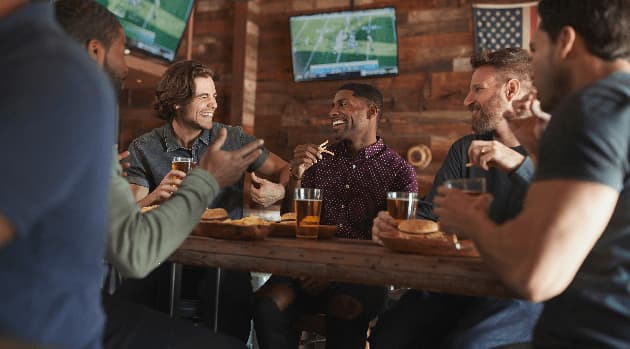
Table of Contents
Running a busy sports bar means dealing with packed crowds on game day, back-to-back service rushes, and furniture that takes a beating from opening bell to last call. The best sports bar furniture doesn't just look good; it holds up under pressure and helps you seat more guests without sacrificing comfort or style. Whether you're building out a new space or swapping out worn-down seating, this guide walks through the furniture solutions that make the biggest difference in high-traffic bar environments.
Bar Stools: The Foundation of Sports Bar Seating
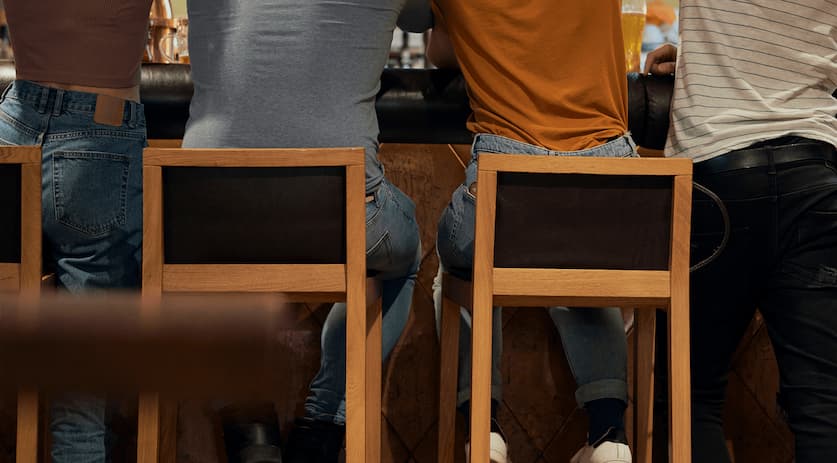
No piece of furniture works harder in a sports bar than the bar stool. Guests slide in and out repeatedly throughout a game, lean back when the action heats up, and set down drinks, plates, and gear. Your stools need to handle all of it without loosening, tipping, or looking beat-up after a season.
What To Look for in Commercial Bar Stools
When choosing commercial bar stools, focus on four things:
- Frame material. Metal and aluminum frames, particularly steel with a powder-coated or chrome finish, offer the best combination of strength and resistance to corrosion from spills. A1 Restaurant Furniture carries commercial metal bar stools, commercial aluminum bar stools, and stainless steel bar stools, all of which are popular choices for high-traffic bars because they withstand heavy use without warping or cracking. For a warmer aesthetic, commercial wooden bar stools are also available.
- Footrest durability. The footrest takes a constant beating. Look for stools with a reinforced or welded footrest rather than one attached by screws that will loosen over time.
- Seat surface. Upholstered seats add comfort for long games, but the material matters. Vinyl and faux leather wipe clean in seconds and resist staining. They're far better choices for a bar environment than fabric.
- Height. Standard bar stools run 28-30 inches for bar-height counters, while counter-height stools sit around 24-26 inches. Make sure your stool height matches your counter or table height before ordering in bulk.
Swivel vs. Stationary Stools
Commercial swivel bar stools for sports bars are smart because they let guests rotate to watch screens around the room without standing up or repositioning the stool. This keeps the floor tidier, reduces noise from scraping, and makes it easier for servers to reach across. A1 also carries stationary stools, which are fine for bar counters where screen placement is directly in front of guests.
Back vs. Backless Stools
Backless stools maximize your ability to tuck stools under counters and tables when not in use, saving space during slower periods. However, for long game-day sittings (think a four-hour double-header), guests appreciate having a back to lean against. A practical approach is to use backless stools along your main bar counter and back-support stools at high-top tables and communal areas where guests tend to settle in for longer.
Explore A1 Restaurant Furniture's full range of bar stools for sports bars, including metal, aluminum, stainless steel, wooden, and swivel options built for commercial use.
High-Top Tables: Building the Communal Viewing Experience
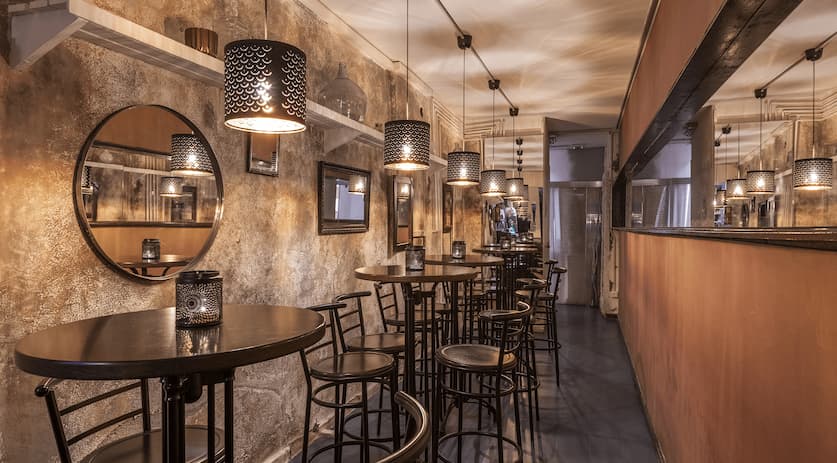
The communal high-top table is the signature piece of sports bar furniture. It brings groups together, keeps sightlines elevated for screen viewing, and allows you to seat more people per square foot than standard dining tables can.
Choosing Bar Height Tables and the Right Table Top
Bar height tables, typically 40-42 inches tall, are the standard for sports bar floor plans. They pair naturally with bar stools and create a relaxed social atmosphere that encourages guests to linger without demanding the formal posture of standard dining height.
At A1 Restaurant Furniture, high-top configurations are built by pairing table tops with separate table bases, giving you full control over size, material, and style. The table bases category includes 2-piece bases, 3-piece bases, and industrial table bases well-suited for bar-height builds. This modular approach makes it easy to replace just the top or just the base down the road, reducing long-term costs.
When evaluating high-top tables for bars, the choice of indoor table top matters. The table surface faces constant punishment from drinks, food, elbows, and frequent wiping down with cleaning chemicals. A few standout options for sports bar environments include:
- Laminate table tops: Among the most practical choices for high-traffic bars, they resist scratches, repel moisture, and clean up quickly.
- Resin restaurant table tops: Offer added durability against impact and spills.
- Melamine table tops: Deliver a polished appearance with strong resistance to wear for operators who want a more finished look without sacrificing function.
- Resin-wood table tops: Combine the visual warmth of wood grain with significantly better moisture and impact resistance than untreated wood surfaces.
Booth Seating: Where Comfort Meets Capacity
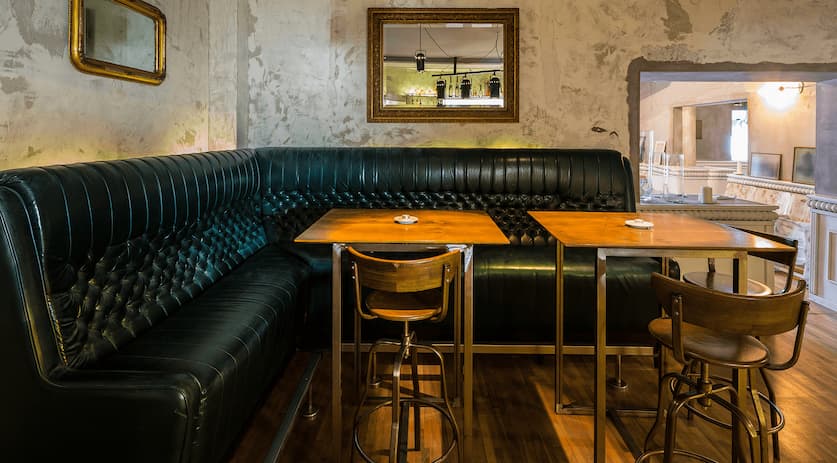
Booths might seem like a concept better suited to diners than sports bars, but done right, they serve a real function in pub and bar settings, particularly along perimeter walls where you want to maximize seating without blocking traffic flow through the middle of the room.
Why Booths Work in Sports Bars and Pubs
Restaurant booths for bars offer a few practical advantages over open seating. They're fixed in place, meaning guests can't accidentally knock them over in a busy room. They define space without requiring hard walls or dividers, helping segment your floor plan into zones. And upholstered booth seating is genuinely comfortable for long stays, which matters when guests are camped out for an entire game day.
The key to using booths as sports pub furniture is choosing styles that hold up to heavy use. A1 Restaurant Furniture carries several booth styles suited to bar environments:
- Metal booths offer exceptional structural durability — ideal for environments with heavy daily traffic. The metal frame handles the physical stress of constant use, and they can be paired with seat cushions for added guest comfort.
- Upholstered booths are a strong option when seating comfort is a priority. For bar environments, look specifically for vinyl or faux leather upholstery options within this category — they wipe clean quickly, resist staining, and hold up to the friction of guests sliding in and out throughout the day.
- Mix & match upholstered booths offer additional flexibility to coordinate booth seating with your existing décor or seating color scheme.
Back height is also worth considering. Higher booth backs create more defined zones and give guests a sense of privacy and semi-enclosure, which enhances the viewing experience at booth-level screens by reducing visual distraction from the rest of the room.
Sports Bar Layout Tips for High-Traffic Environments
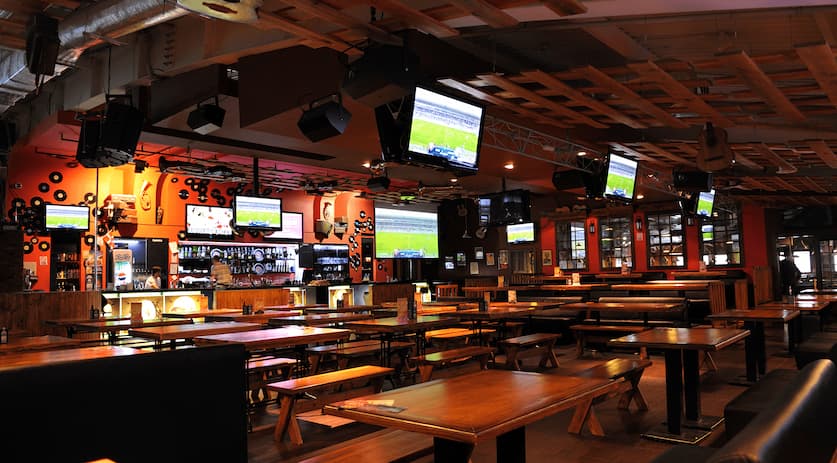
The best sports bar seating layout balances three things: maximum capacity, efficient traffic flow, and unobstructed sightlines to screens. Here are a few guiding principles when positioning bar furniture for sports bars:
- Zone your floor plan. Divide the space into a bar counter zone and a booth/dining zone. Each zone can serve a different type of guest: quick drinkers at the bar and longer-stay guests in booths.
- Leave clear server pathways. A minimum 36-inch clearance between tables is a practical baseline; 42-48 inches on main server pathways near the bar and kitchen makes a real difference during busy service.
- Account for game-day capacity. On major game nights, your crowd may be 20-30% larger than average. Build your layout around comfortable capacity, but make sure tables and restaurant chairs for bars can be reconfigured or stacked to open up standing room when needed.
- Think about screen sightlines. Position high-top tables and bar counter seating so that the majority of seats have a direct or near-direct line to at least one screen. Booths placed alongside walls often work best when paired with a dedicated screen in that zone rather than relying on the main screen.
The Best Sports Bar Furniture Built for Game Day Crowds
Game days, happy hours, and late-night crowds are enough to put serious pressure on any venue. A1 Restaurant Furniture for sports bars includes bar stools that remain sturdy after thousands of sit-downs, high-top tables built on stable bases, and booth seating that keeps guests comfortable without creating extra work for staff. When your furniture is built for performance, your bar can handle whatever the night brings. Want the best value? Check out our restaurant furniture bundles.
Contact UsSports Bar Furniture FAQs
How do I calculate how many barstools will fit at my bar counter?
The industry standard is to plan for one bar stool for every 24 inches of counter length for backless stools, or every 30 inches for stools with arms. To calculate, measure the total length of your counter in inches, then divide by 24 (or 30 for arm stools). Leave a 6-inch buffer at each open end of the counter. So a 10-foot (120-inch) bar, minus 12 inches for end buffers, gives you 108 usable inches; enough for 4 backless stools at 24-inch spacing, or 3 arm stools at 30-inch spacing. For swivel stools, plan for a minimum of 6-10 inches of side clearance between seats so guests can rotate without disrupting neighbors.
What's the correct bar stool height for a 40-42 inch high-top table?
For a bar-height table or counter measuring 40-42 inches tall (the standard for sports bars) you need bar stools with a seat height of 28-30 inches. This creates a 10-12 inch gap between the seat and the underside of the tabletop, which is the correct clearance for comfortable legroom and natural posture. Going taller or shorter than this range forces guests to hunch, stretch, or sit with their knees jammed, all of which become significant comfort complaints during a four-hour game.
Do I need to buy table tops and table bases separately, or does A1 sell complete tables?
We sell table tops and table bases as separate components, which is the preferred approach for most commercial bar builds. This modular system gives you full control over the size, shape, material, and height of your tables rather than being locked into pre-set configurations. It also makes replacing a damaged component less expensive. For sports bar high-top builds, you'd pair a table top from the indoor table top category with a bar-height base from the table bases category, which includes 2-piece bases, 3-piece bases, and industrial table bases suited to commercial environments.
Related Articles


Save: 55% off


- Aluminum Restaurant Chairs
- Metal Restaurant Chairs
- Stainless Steel Restaurant Chair
- Veneer Metal Restaurant Chairs
- Wood Restaurant Chairs

- Commercial Aluminum Bar Stools
- Commercial Metal Bar Stools
- Stainless Steel Bar Stools
- Veneer Metal Bar Stools
- Commercial Wooden Bar Stools
- Commercial Swivel Bar Stools
- Restaurant Swivel Bar Stools

- Outdoor Restaurant Bench
- Outdoor Restaurant Chairs
- Outdoor Restaurant Table Base
- Outdoor Restaurant Bar Stools
- Outdoor Restaurant Tables

- Restaurant Benches
- Wood Restaurant Booths
- Melamine Booths
- Metal Booths
- Upholstered Booths
- Mix & Match Upholstered Booths

- Almond Wood Table Tops
- Bamboo Table Tops
- Beech Wood Table Tops
- Ceramic Table Tops
- Elm Wood Table Tops
- Granite Table Tops
- Indoor Sintered Stone Table Tops
- Laminate Table Tops
- Marble Table Tops
- Medium Density Fiberboard Tops
- Melamine Table Tops
- Oak Wood Table Tops
- Resin Restaurant Table Tops
- Resin-Wood Table Tops
- Reversible Table Tops
- Teak Wood Table Tops
- Wood Veneer Table Tops
- Indoor Compression Table Tops
- Pine Wood Table Tops


  |