


Fine-Dining Restaurant Furniture Buying Guide
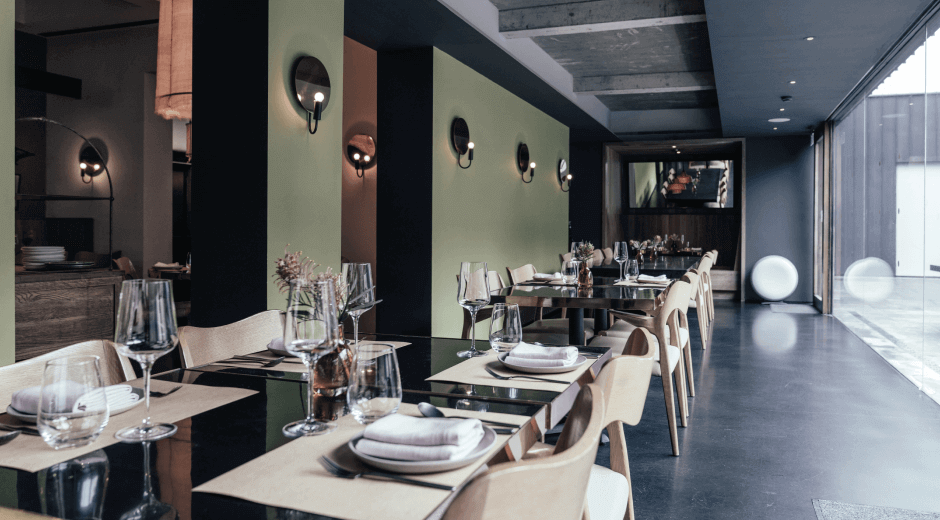
The right fine-dining restaurant furniture does more than fill a room; it shapes how guests perceive your brand from the moment they sit down. The scale of a chair, the finish on a tabletop, and the structure of a booth all contribute to whether the space feels elegant or ordinary.
In a fine-dining setting, furniture must look refined while standing up to constant use. Comfort matters just as much as aesthetics, especially when guests are seated for multiple courses. This guide breaks down how to choose seating, tables, and compatible pieces that support a sophisticated atmosphere without sacrificing durability.
Define Your Concept Before You Shop
Before comparing finishes or upholstery options, step back and define the atmosphere you're trying to create. Fine-dining spaces feel intentional because every furniture decision supports a clear visual direction. That might mean a modern, minimal aesthetic with clean lines and matte surfaces, or a more traditional look with rich wood tones and upholstered seating. The key is consistency.
When sourcing luxury restaurant furniture, start with anchor pieces. Booths, main dining chairs, and tabletops should establish the tone of the room. Once those are selected, bar seating and accent pieces can follow the same material story so the space feels cohesive. Reviewing commercial-grade restaurant chairs early in the process often helps define scale and silhouette before moving on to tables and booths.
It's also important to think beyond appearance. Consider how long guests will be seated, how close tables are positioned, and how servers move through the space. Fine dining is as much about flow and comfort as it is about aesthetics, so your furniture selections should support both.
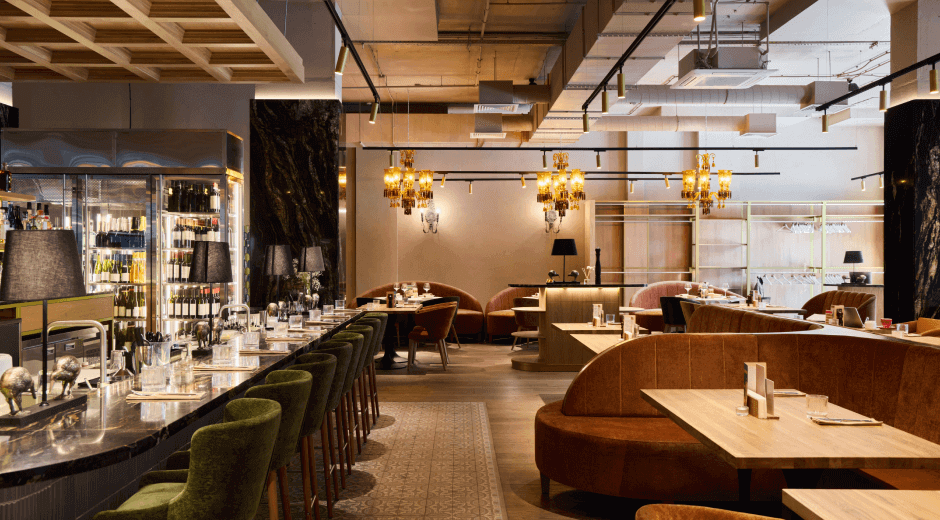
Key Pieces That Create an Upscale Feel
Certain furniture elements immediately signal quality in a fine-dining environment. When these pieces are selected with intention, they upgrade the entire room and reinforce your brand positioning.
Booths That Look Custom and Structured
Few elements communicate permanence and polish like well-designed booths. In many fine-dining spaces, booths define the perimeter and give the room architectural structure. They create privacy for guests while reinforcing a tailored look that loose tables alone can't achieve.
When selecting restaurant booths, pay attention to height, upholstery style, and spacing. A taller back can subtly divide the room, while channel or panel designs add texture without overwhelming the space. Materials should feel substantial and easy to maintain, especially in high-traffic areas. The goal is to make booths feel built-in and intentional rather than added as an afterthought.
Upholstered Seating That Encourages Guests to Stay
In fine dining, comfort directly impacts the guest experience. Well-designed fine-dining restaurant chairs should provide enough support for a full meal without feeling overly casual. Upholstered seats and backs add visual warmth while softening the overall layout.
The frame construction matters just as much as the fabric. Solid wood or reinforced metal frames help ensure your fine-dining chairs maintain their structure over time. Upholstery should complement the rest of the room's finishes while remaining practical for regular cleaning. A slightly contoured back or cushioned seat can make a noticeable difference during longer dining experiences.
Tabletops That Feel Substantial
Tables are where the experience literally unfolds, so surface selection carries weight. Indoor restaurant tables should feel sturdy, balanced, and appropriately scaled to the room. Thin or lightweight tops can undermine an otherwise enriched design.
Stone-look finishes, thicker profiles, and well-matched bases contribute to a more refined presentation. When paired thoughtfully with your seating, these elements create elegant dining room furniture arrangements. Make sure base styles complement chair silhouettes so the space reads as coordinated from every angle.
Bar Seating That Matches the Dining Room Standard
If your concept includes a lounge or bar area, it should reflect the same design discipline as the main floor. Guests often wait, enjoy cocktails, or dine casually at the bar, so comfort and durability matter.
Selecting commercial-grade bar stools that align with your chair finishes helps maintain continuity throughout the space. Back support, footrest placement, and seat padding all contribute to whether the area feels like an extension of the dining room or a separate concept. Consistency reinforces quality.
Pro Tip: Make the most of your furniture allowance with restaurant furniture bundles.
A Practical Buying Checklist for Fine-Dining Spaces
Investing in upscale restaurant furniture means balancing appearance with long-term performance. Before finalizing your order, confirm the following:
- Accurate Measurements: Verify aisle widths, table spacing, and booth dimensions to maintain comfortable flow for guests and servers.
- Commercial-Grade Construction: Look for reinforced joints, durable finishes, and stable table bases.
- Comfort for Longer Seating: Ensure chairs and booths provide proper support for multi-course dining.
- Maintenance Requirements: Choose upholstery and tabletop materials that are easy to clean and resistant to staining.
- Consistency Across Zones: Coordinate dining, booth, and bar seating.
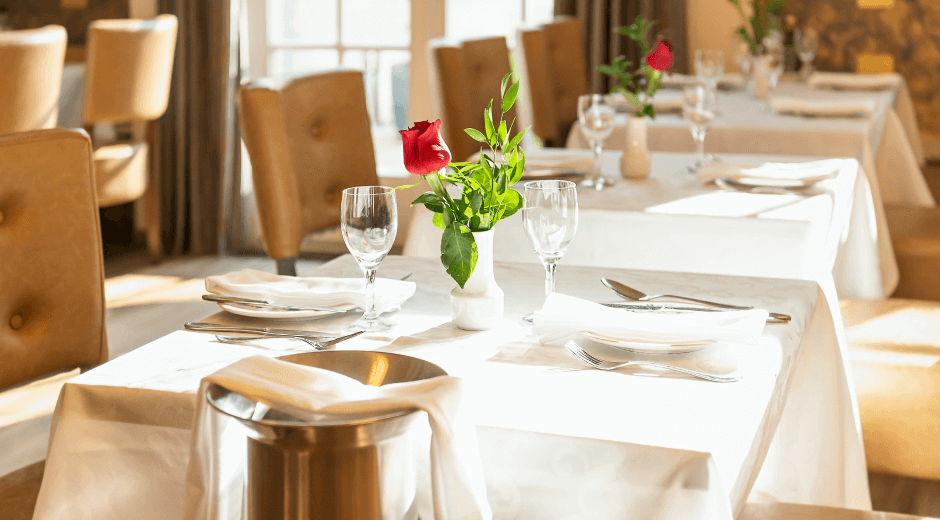
Furniture Pairings That Work in Fine-Dining Spaces
Once your core pieces are selected, thinking in coordinated groupings helps ensure the room feels intentional. The goal isn't to match everything exactly, but to create harmony across materials, finishes, and proportions.
Here are a few combinations that consistently translate well in fine-dining environments:
- Upholstered side chairs + stone-look tabletops + dark metal bases: This pairing blends softness with structure and works well in modern or contemporary concepts.
- Channel-back booths + wood-edge tabletops + matching wood-frame chairs: A strong choice for restaurants that want warmth without feeling too casual.
- Fully upholstered chairs + thicker-profile tabletops + coordinated bar stools: This approach creates visual continuity between the dining room and bar area while reinforcing a high-end restaurant furniture aesthetic.
Bring Your Fine-Dining Vision to Life
Designing a fine-dining space requires careful coordination, and the right furniture partner makes the process smoother. If you're planning a new concept or upgrading your current layout, explore A1 Restaurant Furniture's selection of commercial chairs, booths, indoor tables, and bar stools to build a memorable dining environment that reflects your brand.
Contact UsFine-Dining Restaurant Furniture FAQs
What are the benefits of using upholstered chairs in a fine-dining setting?
Upholstered seating improves guest comfort during longer dining experiences, which is especially important in multi-course service environments. Padding in the seat and back reduces fatigue, while fabric or vinyl upholstery softens acoustics by absorbing some ambient sound. In fine-dining restaurant furniture layouts, upholstered chairs also visually enhance the space by adding depth and texture compared to fully exposed wood or metal frames.
How can I maintain and care for luxury furniture pieces?
Maintenance starts with selecting commercial-grade materials designed for hospitality use. For upholstered pieces, follow the manufacturer's cleaning recommendations and use non-abrasive cleaners approved for vinyl or performance fabrics. Tabletops should be wiped promptly after service with products suitable for their finish, whether laminate, solid wood, or stone-look surfaces. Routine inspection of joints, bases, and glides also helps extend the life of luxury restaurant furniture and prevents small structural issues from becoming costly repairs.
What should I consider when buying complete fine-dining furniture packages?
When sourcing coordinated fine-dining furniture sets, confirm that all pieces are rated for commercial use and designed to work together dimensionally. Table heights must align properly with chair seat heights, and booth depths should allow comfortable entry and exit without crowding aisles. It's also important to verify lead times, freight considerations, and replacement availability so future expansions or repairs can be handled without disrupting your design consistency.
Related Articles


Save: 62% off


- Aluminum Restaurant Chairs
- Metal Restaurant Chairs
- Veneer Metal Restaurant Chairs
- Wood Restaurant Chairs

- Commercial Aluminum Bar Stools
- Commercial Metal Bar Stools
- Veneer Metal Bar Stools
- Commercial Wooden Bar Stools
- Commercial Swivel Bar Stools
- Restaurant Swivel Bar Stools

- Outdoor Restaurant Bench
- Outdoor Restaurant Chairs
- Outdoor Restaurant Table Base
- Outdoor Restaurant Bar Stools
- Outdoor Restaurant Tables

- Restaurant Benches
- Wood Restaurant Booths
- Melamine Booths
- Metal Booths
- Upholstered Booths
- Mix & Match Upholstered Booths

- Almond Wood Table Tops
- Bamboo Table Tops
- Beech Wood Table Tops
- Ceramic Table Tops
- Elm Wood Table Tops
- Granite Table Tops
- Indoor Sintered Stone Table Tops
- Laminate Table Tops
- Marble Table Tops
- Medium Density Fiberboard Tops
- Melamine Table Tops
- Oak Wood Table Tops
- Resin Restaurant Table Tops
- Resin-Wood Table Tops
- Reversible Table Tops
- Teak Wood Table Tops
- Wood Veneer Table Tops
- Compression Table Tops
- Pine Wood Table Tops
- Outdoor Ashwood Table Tops
- Outdoor Bamboo Table Tops
- Outdoor Laminate Table Tops
- Outdoor Marble Table Tops
- Outdoor Resin Table Tops
- Outdoor Sintered Stone Table Top
- Outdoor Teak Wood Table Tops
- Composite Outdoor Table Tops
- Outdoor Ceramic Table Tops


  |