


Industrial Style Restaurant Furniture Shopping Guide

If you're drawn to the industrial aesthetic, you already know what makes it work: raw materials and a no-nonsense approach to design that happens to look great. But pulling it off in a commercial setting means thinking beyond style.
Let's break down the main furniture categories and what to look for in each one, so your space looks intentional without becoming a maintenance headache.
What Makes Furniture 'Industrial'?
Before we get into specific categories, it helps to understand what defines industrial-style restaurant furniture. Industrial design draws from the look of old factories and warehouses: exposed metal, unfinished or lightly finished wood, utilitarian shapes, and finishes that lean dark or raw rather than polished or ornate. The goal is a space that feels like it has a history, even if it was built last year.
In a commercial context, this translates to:
- Metal frames, often in black, gunmetal, or antique finishes
- Wood surfaces that emphasize grain rather than hiding it, sometimes with a reclaimed or weathered look
- Simple silhouettes without decorative carving or upholstery-heavy construction
- Hardware and structural elements that are visible
The practical upside is that industrial commercial furniture is built to last. Metal frames resist warping and cracking. Wood surfaces with proper sealing stand up to moisture. And the overall aesthetic is forgiving enough that a few scuffs or dings add character rather than signal neglect.
Industrial Restaurant Seating
Seating is where most restaurant owners spend the bulk of their furniture budget, and for good reason. It takes the most punishment and shapes the guest experience most directly. Let's talk about the best stuff industrial chairs are made of.
Metal Restaurant Chairs
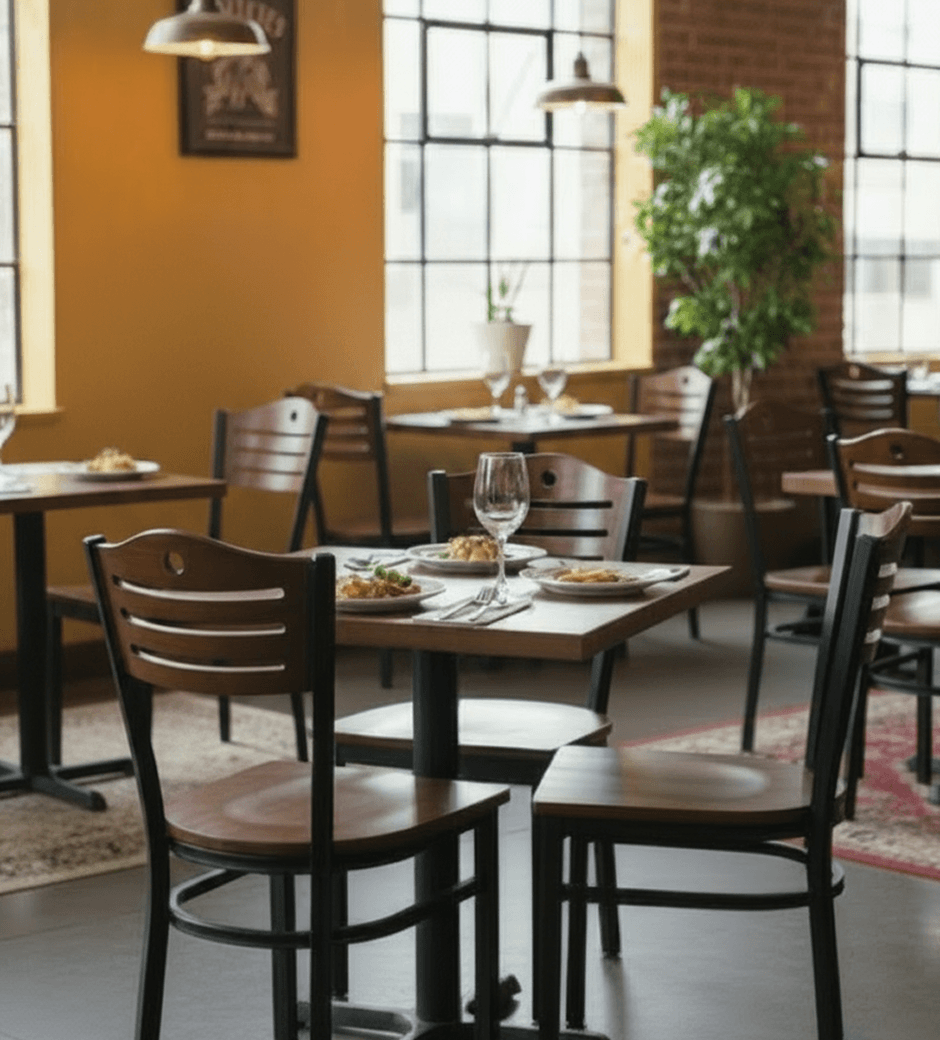
Metal restaurant chairs are the backbone of industrial seating. Look for frames made from steel or iron with a powder-coated finish, which holds up better than painted finishes, especially against chipping and scratching. Black is the most common finish for industrial spaces, but gunmetal and dark bronze options are available and can add visual depth without breaking the aesthetic.
When you're evaluating industrial restaurant chairs, pay attention to how the joints are constructed. Welded joints are more durable than bolted ones for high-traffic use. Also check whether the chair has floor glides, since bare metal legs will damage flooring and create noise on hard surfaces.
Pro tip: Pair a metal frame with a warmer seat surface, such as wood veneer or vinyl, to maintain the look while adding comfort for longer dining occasions.
Industrial Bar Stools: Getting the Height Right
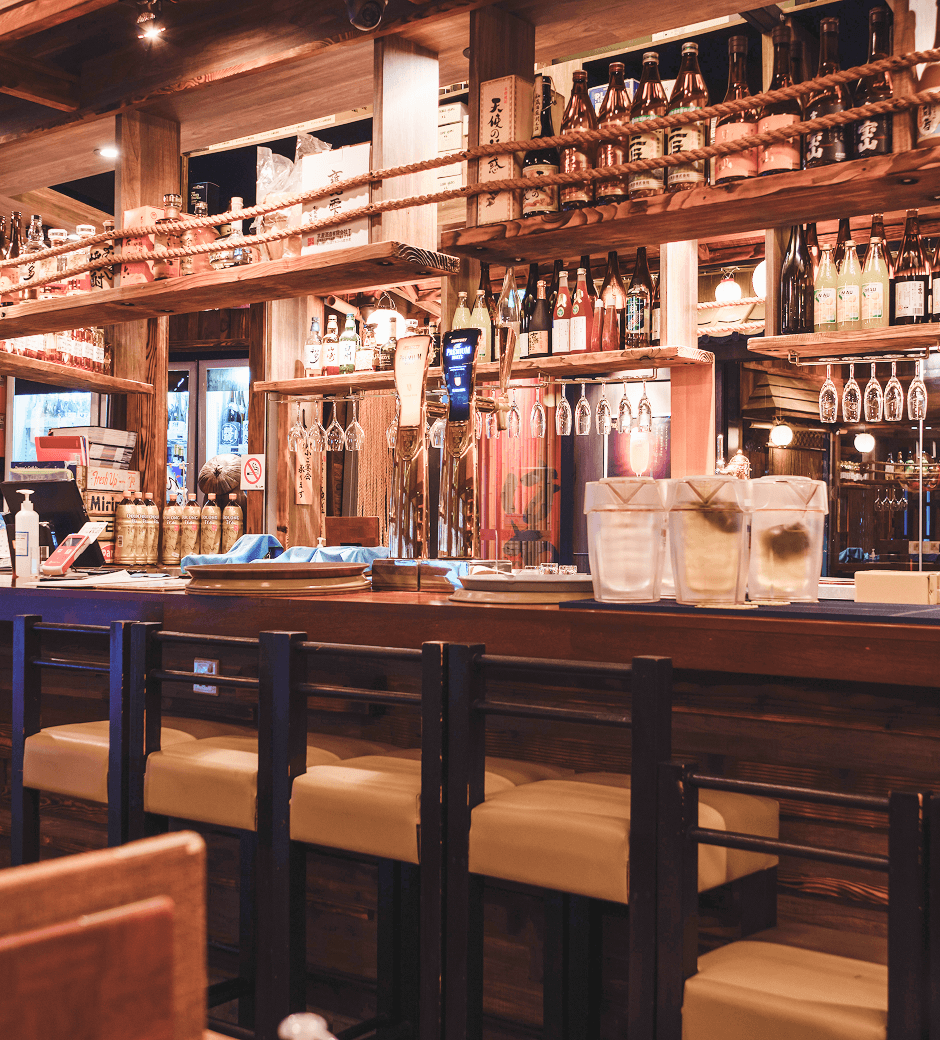
Industrial bar stools are almost inseparable from the aesthetic. A mismatch between stool height and counter or bar height is one of the most common and costly mistakes in restaurant furniture planning. We carry a wide selection of varying height bar stools for you to choose from.
For a genuine industrial feel, backless stools are a popular choice. They're streamlined, easy to tuck under a counter, and they have a utilitarian quality that reads as intentional rather than sparse. If your space needs a bit more comfort, back stools with a simple crossbar or slatted back still read as industrial without compromising the look.
Swivel vs. stationary is another choice worth thinking through. Swivel stools work well at bars and counters where guests need to turn frequently. Stationary stools are generally more stable and easier to maintain.
When Seating Comfort Matters
One thing that sometimes gets overlooked when designing an industrial space is seat comfort. The aesthetic tends to favor hard surfaces, but a chair that's uncomfortable after 20 minutes will push guests to wrap up their meal and leave, which may or may not align with your table-turn goals. If you're running a casual cafe or a full-service restaurant where guests linger, consider chairs that include a padded or contoured seat within a metal frame construction. You can maintain the industrial look while giving your guests a reason to stay.
Industrial Restaurant Tables: Tops, Bases, and Putting It Together
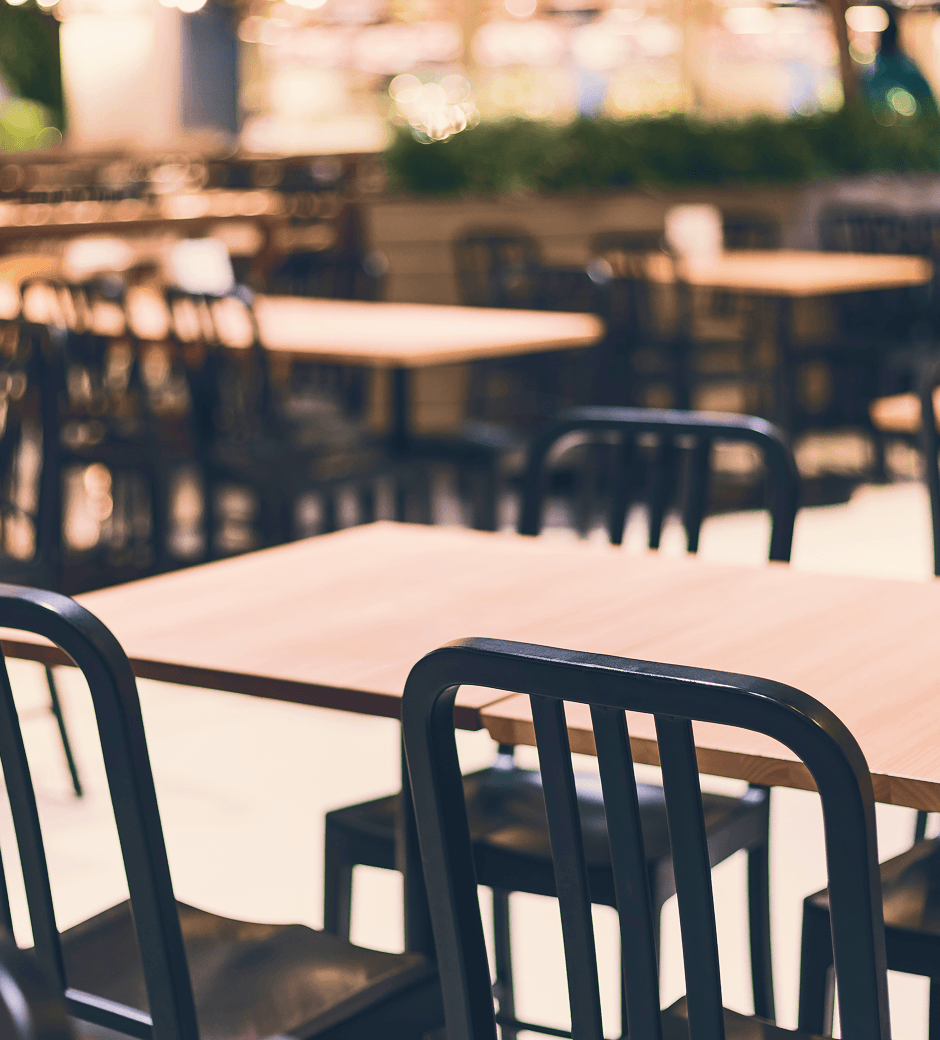
Industrial restaurant tables are almost always a mix of materials. A wood or wood-look top on a metal base is the signature combination, and it works for good reason: the contrast between warm and cool materials is exactly what makes industrial spaces feel layered rather than sterile.
Table Tops for an Industrial Look
For an authentic industrial feel, wood grain tops are the most natural fit. Elm, oak, and pine all have the visible grain and texture that suits the aesthetic. If you want something more durable in a high-volume environment, wood veneer over MDF or a resin-wood composite gets you close to the same look with better resistance to moisture and warping. Darker finishes that emphasize knots and natural variation tend to read as more industrial than smooth, uniform surfaces.
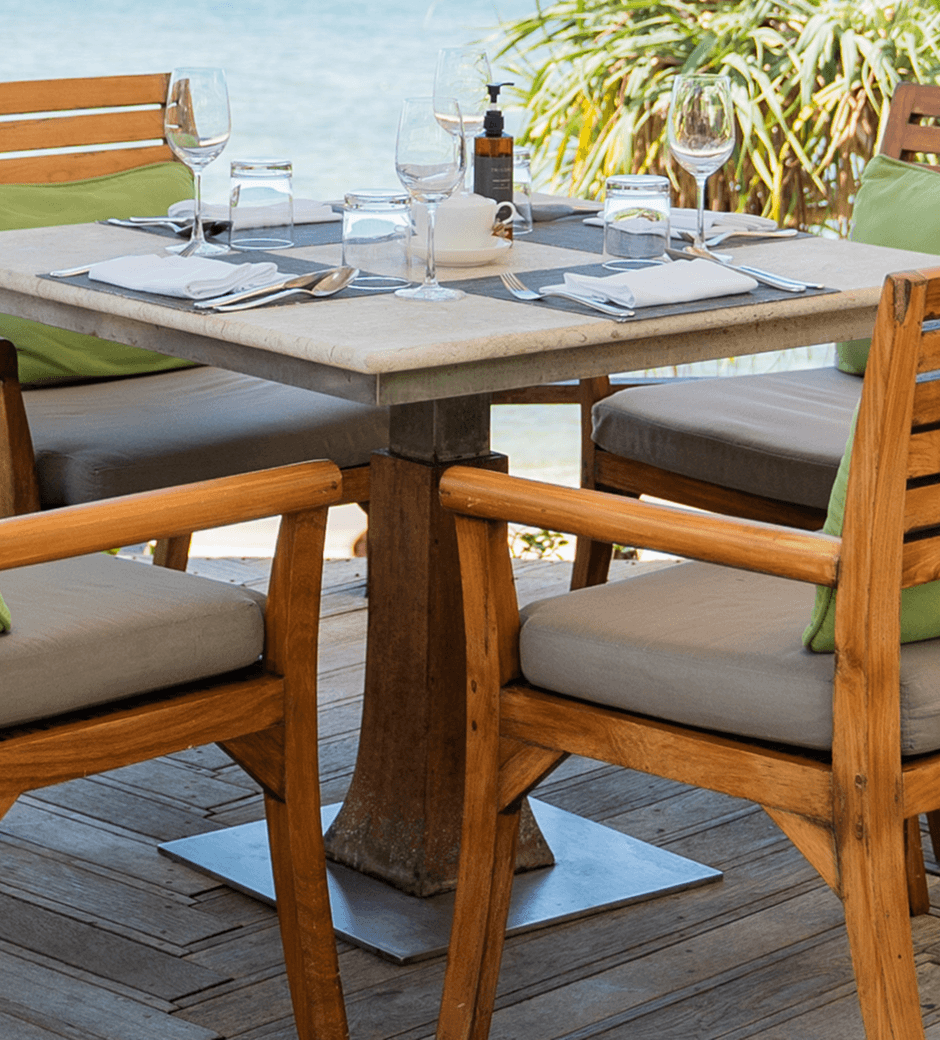
Avoid highly polished or glass-topped tables in an industrial space. They undercut the raw quality that the aesthetic depends on.
Industrial Bar Stools: Getting the Height Right
The table base is often where an industrial table setup succeeds or falls apart visually. Cast iron bases are the strongest choice for aesthetics, both in durability and appearance. They're heavy, which means genuine stability, and the raw or coated finishes suit the style without any visual workarounds.
For industrial spaces, prong-style cast iron bases, whether three-prong or four-prong, are a common and well-suited option. Both feature arched supports and ribbed feet that reinforce the aesthetic while keeping the base structurally sound for commercial use. A four-prong base is typically the better choice for larger tops (up to 36x36), while a three-prong works well for smaller two-top configurations.
When pairing a base to a top, make sure you're matching the base footprint to the top size correctly. A mismatched base-to-top ratio creates instability, which is a safety issue on top of being visually awkward.
Standard dining-height bases are 28 inches, while bar height bases are 40 inches. If you're building out a space with both dining and bar seating, be deliberate about ordering the correct height for each application.
Industrial Booth Seating: A Harder Ask, Done Right
Industrial booth seating is a bit trickier to pull off than open seating, because booth construction traditionally skews toward upholstery, which can soften the industrial look. The workaround is choosing booths with metal structural elements and keeping the upholstery in a material that suits the palette, such as dark vinyl in charcoal, black, or a tobacco brown.
Look for booths built on heavy-duty metal frames with upholstered vinyl backs and seats. That construction keeps the industrial bones visible while still meeting commercial durability standards. The key is a color palette that's consistent with the rest of the space rather than one that introduces warm neutrals or patterns that pull the eye away from the overall aesthetic.
Booth seating also plays well with industrial restaurant tables, particularly when paired with a wood-top table on a cast-iron base. The combination anchors the seating area visually and creates a cohesive look that doesn't require a lot of additional décor to feel complete.
Putting the Room Together
Here are a few practical notes on combining pieces:
- Finish consistency matters more than people think.If your chairs are matte black, a chrome table base will feel out of place. Stick to a narrow finish palette, typically one or two metal finishes, and let the wood tones provide contrast.
- Don't over-index on matching. Industrial spaces actually benefit from some variation. A mix of chairs and stools in the same finish family, or different wood tones on tops that share the same base style, can feel more authentic than a perfectly uniform room.
- Think about density. Industrial spaces often feature more open layouts with fewer, larger pieces rather than cramped seating. Giving tables and chairs room to breathe reinforces the warehouse feel.
Rely on A1 for Practical, Durable Industrial Restaurant Furniture
If you're ready to start sourcing, A1 Restaurant Furniture is ready to help you furnish your restaurant with a full range of industrial-compatible seating and tables. We've been supplying commercial restaurant furniture since 2013, and our catalog is deep enough that most industrial builds can be completed right here. Let's do this!
Contact UsFAQs: Industrial Style Restaurant Furniture
Does industrial furniture require special maintenance?
Not really, but there are a few things worth knowing. Powder-coated metal frames are low maintenance: wipe them down with a damp cloth and avoid abrasive cleaners that can scratch the finish over time. If a chip or scratch develops on a powder-coated surface, touching it up promptly prevents rust from forming, which is particularly important for cast iron bases. Wood and wood-veneer tops should be wiped dry after spills rather than left wet. For high-volume environments, a properly sealed top will outperform an unsealed one.
Can industrial furniture be mixed with other design styles?
Yes, and it often looks better when it is. Industrial pieces pair naturally with modern farmhouse, Scandinavian minimalism, and even transitional styles because the clean lines and neutral finishes don't compete with other design elements. The combination of industrial seating with warmer finishes such as natural oak tops or dark vinyl booth upholstery is particularly common in upscale casual dining because it softens the look without abandoning the aesthetic. What doesn't work as well is mixing industrial pieces with highly ornate or traditional furniture, since the contrast reads as mismatched rather than intentional.
How do I keep an industrial space from feeling too cold or harsh?
Material contrast is the main tool. Pairing metal chairs and bases with wood-grain table tops introduces warmth without softening the overall direction. Lighting also plays an outsized role in industrial spaces: Edison bulbs, pendant lights with metal shades, and warmer color temperatures all contribute to how comfortable a space feels. On the furniture side, even a small amount of upholstery, such as a padded vinyl seat on an otherwise all-metal chair, can shift the experience. The goal is balance between the structural, utilitarian elements that define the look and the softer touches that make a space people want to spend time in.
Related Articles


Save: 52% off


- Aluminum Restaurant Chairs
- Metal Restaurant Chairs
- Veneer Metal Restaurant Chairs
- Wood Restaurant Chairs

- Commercial Aluminum Bar Stools
- Commercial Metal Bar Stools
- Veneer Metal Bar Stools
- Commercial Wooden Bar Stools
- Commercial Swivel Bar Stools
- Restaurant Swivel Bar Stools

- Outdoor Restaurant Bench
- Outdoor Restaurant Chairs
- Outdoor Restaurant Table Base
- Outdoor Restaurant Bar Stools
- Outdoor Restaurant Tables

- Restaurant Benches
- Wood Restaurant Booths
- Melamine Booths
- Metal Booths
- Upholstered Booths
- Mix & Match Upholstered Booths

- Almond Wood Table Tops
- Bamboo Table Tops
- Beech Wood Table Tops
- Ceramic Table Tops
- Elm Wood Table Tops
- Granite Table Tops
- Indoor Sintered Stone Table Tops
- Laminate Table Tops
- Marble Table Tops
- Medium Density Fiberboard Tops
- Melamine Table Tops
- Oak Wood Table Tops
- Resin Restaurant Table Tops
- Resin-Wood Table Tops
- Reversible Table Tops
- Teak Wood Table Tops
- Wood Veneer Table Tops
- Compression Table Tops
- Pine Wood Table Tops


  |