


Fast Food Furniture Guide: How to Choose the Best Chairs, Tables
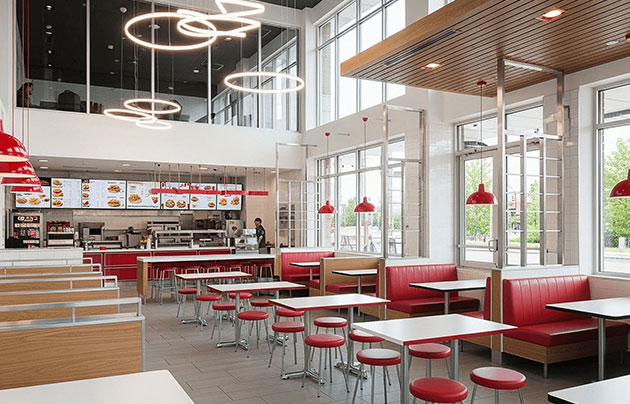
In a fast food restaurant, furniture takes a beating. Chairs get dragged, tables get wiped down dozens of times a day, and booths see a steady stream of customers from open to close. The best fast food furniture keeps things moving; it makes your space easier to clean, supports quick turnover, and gives customers just enough comfort to enjoy their meal without slowing down service.
The wrong furniture, on the other hand, can lead to wobbly tables, cramped layouts, and higher replacement costs down the road.
If you're outfitting a new location or refreshing an existing one, it's worth taking a step back and thinking about how your seating, tables, and booths fit your day-to-day operation. Durability, layout, and ease of maintenance all play a role in how efficient your restaurant feels to both staff and guests.
Let's talk about what to look for when choosing chairs, tables, and booths for fast food environments. Along the way, we'll share practical tips to help you make decisions that hold up long after opening day.
Understanding Furniture Needs: Fast Food vs. Fast Casual
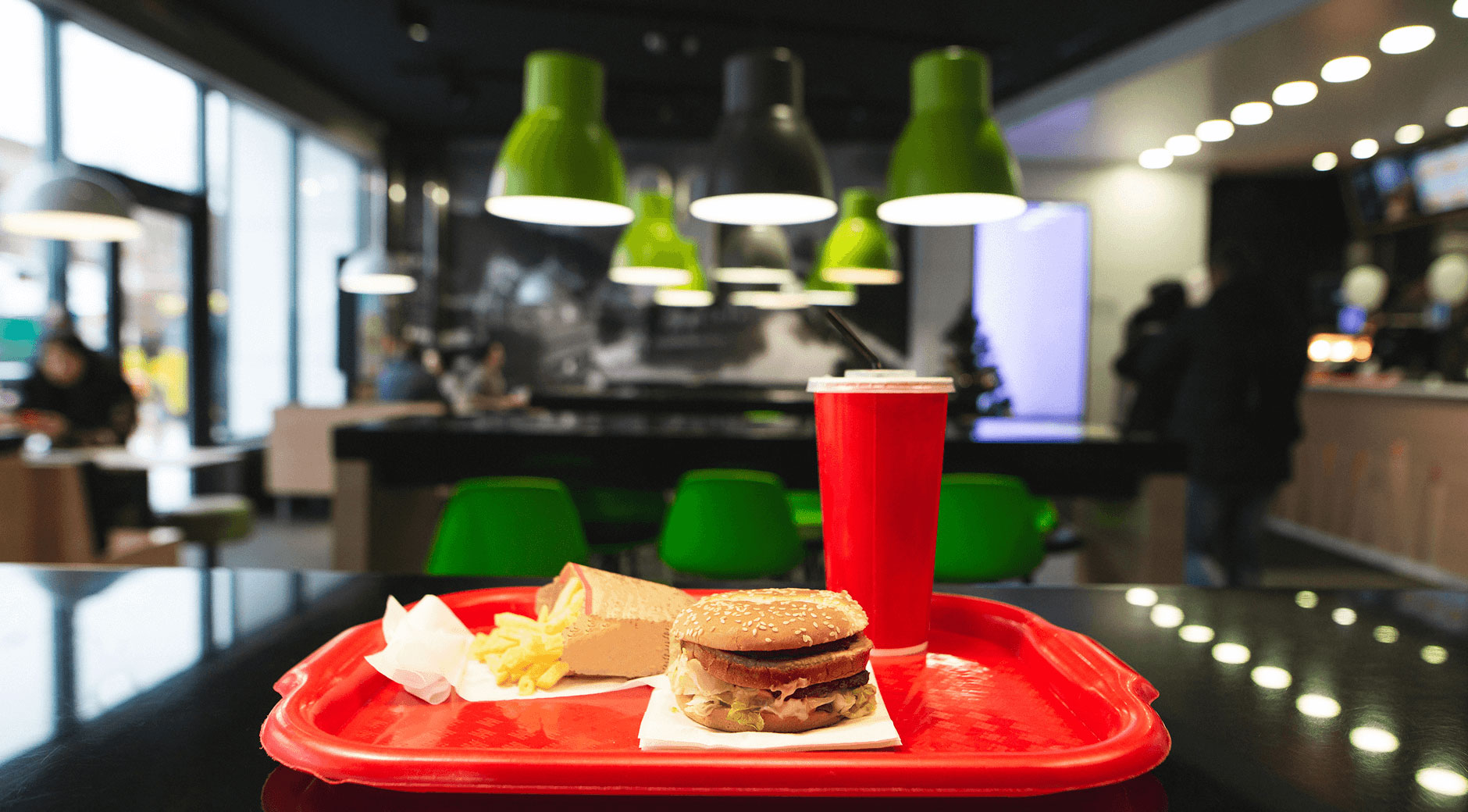
Before you start ordering chairs and tables, it helps to be clear about the type of experience you're offering. While fast food and fast casual restaurants share some similarities, the expectations around seating, comfort, and layout can vary.
What's the Difference?
A common question operators ask is, "What is a fast casual restaurant, and how does it differ from a traditional fast food establishment?" Fast casual concepts focus on higher-quality food, slightly longer dining times, and a more polished atmosphere, even though ordering is still quick and counter-based. Fast food restaurants, on the other hand, are built for speed and volume. Customers expect quick meals, shorter stays, and easy-to-navigate dining rooms.
These differences directly influence furniture choices, from seating style to table size to overall layout. Understanding where your restaurant falls on the fast food–fast casual spectrum makes it much easier to choose furniture that fits your concept, your customers, and your bottom line.
Fast Food Restaurant Furniture: A Snapshot
With fast food restaurant furniture, function always comes first. Your dining room furniture should support high traffic, frequent cleaning, and constant use without slowing down service or creating maintenance headaches.
Priorities include:Priorities include:
- Durability: Furniture must hold up to daily wear, spills, and heavy use.
- Easy cleaning: Smooth surfaces and simple designs save time during peak hours.
- Efficient layouts: The furniture fits your floor plan and helps maximize seating without crowding.
Fast food furniture is less about encouraging guests to linger and more about creating a comfortable, efficient environment that keeps things moving smoothly.
Fast Food Seating That Balances Comfort and Turnover
Seating is one of the biggest drivers of how your dining room functions during peak hours. Most fast food restaurant chairs need to be lightweight, easy to move, and tough enough to handle constant use. Stackable chairs make cleaning faster, while metal or commercial-grade wood frames hold up better over time than residential-style options. The easier it is for staff to reset the dining room, the smoother your rush periods will run.
Comfort still matters, but it should match the pace of your eatery. Many operators go with simple, ergonomic designs with vinyl or easy-clean finishes instead of plush upholstery. This keeps maintenance low while still giving guests a pleasant experience.
Selecting the Right Tables for a Fast Food Dining Room
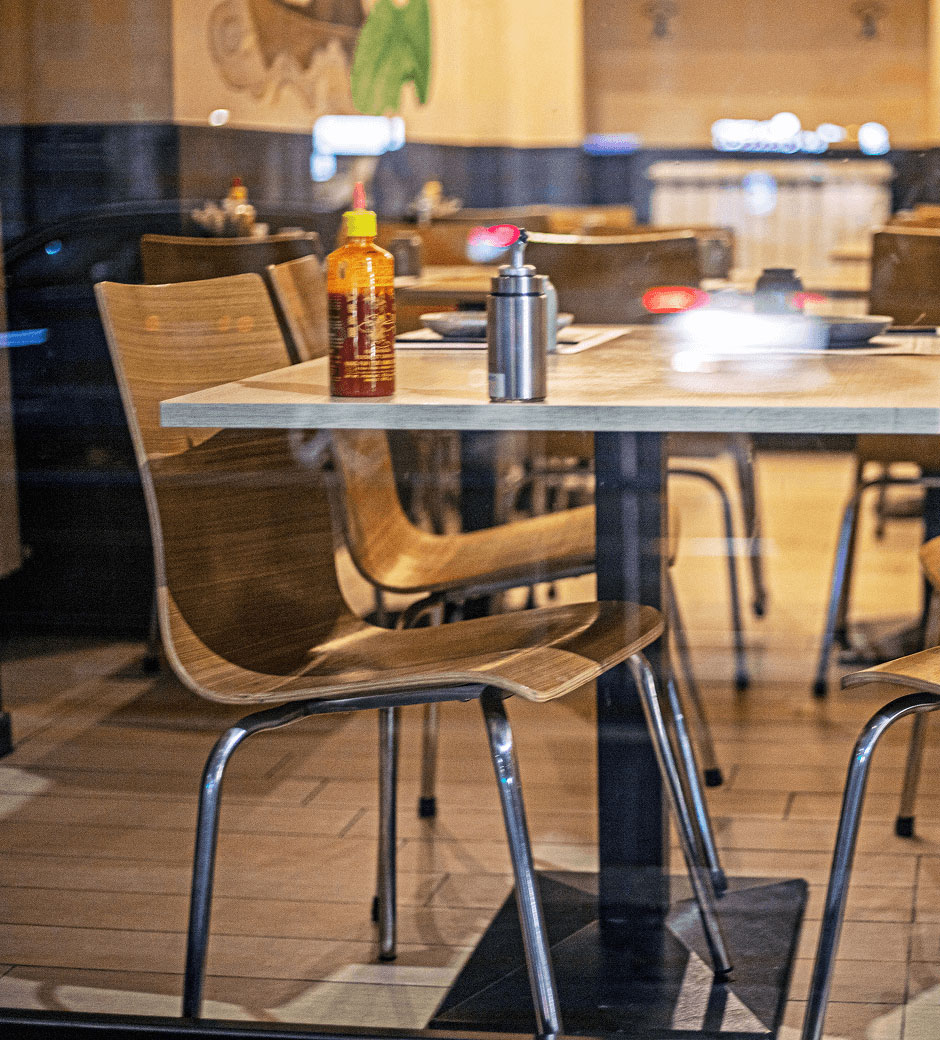
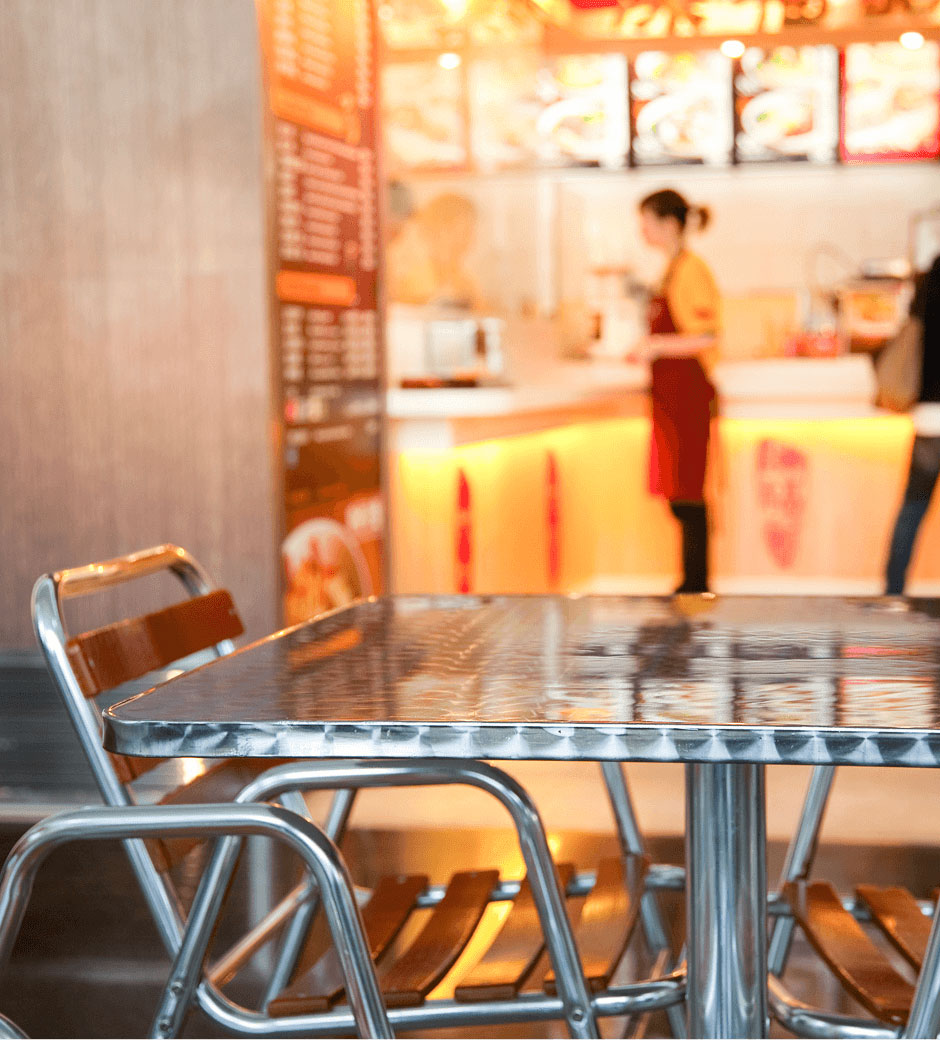
The right fast food table helps define your layout, controls how many guests you can seat, and plays a big role in how easy your dining room is to clean throughout the day.
In fast food environments, smaller table sizes often work best. Two-top and four-top tables make it easier to reconfigure seating as needed and keep traffic paths clear during busy periods. Square and rectangular tables are especially popular because they maximize usable space without creating awkward gaps.
Material choice for table tops is just as important. Laminate, resin, and other commercial-grade surfaces can handle spills, frequent wipe-downs, and constant use without warping or staining. These finishes help staff clean quickly between guests, which is critical during lunch and dinner rushes.
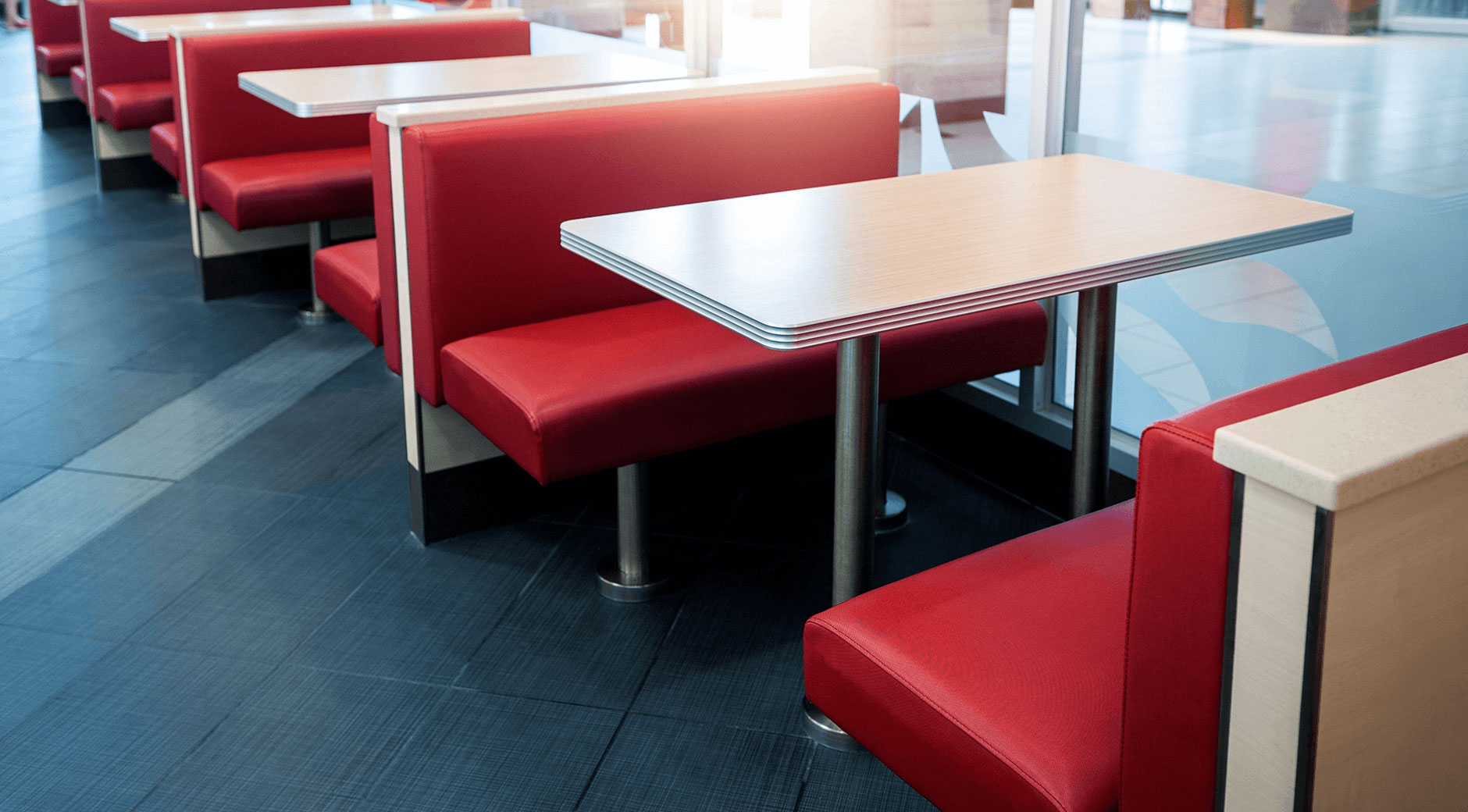
Why Booths Work So Well in Fast Food Restaurants
There's a reason customers tend to gravitate toward fast food booths. They feel a little more private and a bit more relaxed — even when the dining room is busy. For families, couples, and small groups, that sense of separation can make a quick meal feel more enjoyable.
From an operator's perspective, booths also simplify things. Because they're fixed in place, you don't have to worry about tables getting pushed together or chairs ending up where they shouldn't be. That helps keep your layout consistent, walkways clear, and seating predictable during peak hours.
Booths also tend to hold up well in high-traffic spaces. With durable frames and easy-to-clean vinyl upholstery, they're built for constant use and frequent wipe-downs. Over time, that can mean fewer replacements and less day-to-day fuss compared to movable seating.
If your concept leans slightly more upscale, booths are an easy way to bridge the gap into fast casual restaurant furniture without slowing down service. A clean, comfortable booth can boost the feel of your dining room while fitting the pace of a fast food environment.
Don't Overlook Table Bases (They Matter More Than You Think)
Anyone who's dealt with a wobbly table during a lunch rush knows how important table bases really are. A solid base keeps tables steady, prevents spills, and saves your staff from constant fixes and customer complaints.
In fast food settings, stability is key. Indoor tables get leaned on, slid around, and cleaned nonstop, so lightweight or residential-style bases often don't hold up. Heavy-duty commercial bases stay put and handle daily wear without loosening over time.
The right base also makes cleaning easier. Simple pedestal or X-style bases give staff more room to sweep and mop without navigating around multiple legs. That small detail can make a big difference during quick turnarounds between rushes.
Buying Smart and Staying on Budget
Outfitting a fast food restaurant can add up quickly, especially if you're opening a new location or remodeling multiple stores. The good news is that with the right approach, you can furnish your dining room efficiently without cutting corners on quality.
Restaurant Furniture Bundles Make Ordering Easier
One of the simplest ways to stay on budget is by purchasing coordinated furniture sets. Instead of sourcing chairs, tables, and bases separately, furniture bundles give you pieces that work together from the start. That reduces guesswork and helps keep your dining room looking consistent.
Sets are especially useful when speed matters. If you're on a tight opening timeline, having furniture arrive together and ready to assemble can prevent delays. For chains and multi-location operators, sets also make it easier to maintain a uniform look across every restaurant without rethinking furniture choices each time.
From a cost standpoint, bundled options often provide better overall value than buying individual pieces. You get commercial-grade furniture that fits your space and your budget, without having to compromise durability.
Where to Buy Furniture for Fast Food and Fast Casual Restaurants
Now that we've established the "what," let's talk about where to buy furniture for a fast casual restaurant or fast food location. The best place to start is with a supplier that specializes in commercial dining spaces. Residential furniture might look good online, but it's rarely built to handle the pace, traffic, and cleaning demands of a restaurant environment.
That's where A1 Restaurant Furniture comes in. Instead of piecing items together from multiple vendors, operators can find everything they need in one place.
Working with a dedicated restaurant furniture supplier like A1 means access to:
- Commercial-grade products built to hold up in high-traffic dining rooms
- A full range of chairs, tables, and booths
- Restaurant furniture bundles that simplify ordering and help control costs
- Options that support both fast food and fast casual concepts
- Helpful resources to guide purchasing decisions
Rely on A1 Restaurant Furniture for the Best Fast Food Furniture for Your Restaurant
When you choose furniture built for high-traffic dining rooms, you set your team up for smoother shifts and give customers a better overall experience. Let's talk about how A1 can fill your dining room with fast food furniture that balances durability, efficiency, and comfort.
Contact UsFast Food Furniture FAQs
Can I customize my restaurant furniture to match my brand?
Yes, fast food operators can choose furniture that aligns with their brand colors, layout, or overall vibe. From chair finishes to booth upholstery, customization options make it easier to create a cohesive look that feels intentional rather than generic. Even small details can help reinforce your brand while still keeping the space practical and easy to maintain.
How do I determine the right furniture budget for my fast food restaurant?
A good starting point is thinking long-term, not just upfront cost. Commercial furniture that's built for heavy use often costs more initially but lasts longer and requires fewer replacements. Budgeting also depends on your layout, seating capacity, and whether you're furnishing one location or several at once.
What are the benefits of using booths in fast food restaurants?
Booths offer a mix of comfort and structure that works well in fast food environments. Customers often prefer them for the added sense of privacy, especially families and small groups. For operators, booths help control layout, reduce furniture movement, and hold up well under constant use.
Related Articles


Save: 62% off


- Aluminum Restaurant Chairs
- Metal Restaurant Chairs
- Veneer Metal Restaurant Chairs
- Wood Restaurant Chairs

- Commercial Aluminum Bar Stools
- Commercial Metal Bar Stools
- Veneer Metal Bar Stools
- Commercial Wooden Bar Stools
- Commercial Swivel Bar Stools
- Restaurant Swivel Bar Stools

- Outdoor Restaurant Bench
- Outdoor Restaurant Chairs
- Outdoor Restaurant Table Base
- Outdoor Restaurant Bar Stools
- Outdoor Restaurant Tables

- Restaurant Benches
- Wood Restaurant Booths
- Melamine Booths
- Metal Booths
- Upholstered Booths
- Mix & Match Upholstered Booths

- Almond Wood Table Tops
- Bamboo Table Tops
- Beech Wood Table Tops
- Ceramic Table Tops
- Elm Wood Table Tops
- Granite Table Tops
- Indoor Sintered Stone Table Tops
- Laminate Table Tops
- Marble Table Tops
- Medium Density Fiberboard Tops
- Melamine Table Tops
- Oak Wood Table Tops
- Resin Restaurant Table Tops
- Resin-Wood Table Tops
- Reversible Table Tops
- Teak Wood Table Tops
- Wood Veneer Table Tops
- Compression Table Tops
- Pine Wood Table Tops
- Outdoor Ashwood Table Tops
- Outdoor Bamboo Table Tops
- Outdoor Laminate Table Tops
- Outdoor Marble Table Tops
- Outdoor Resin Table Tops
- Outdoor Sintered Stone Table Top
- Outdoor Teak Wood Table Tops
- Composite Outdoor Table Tops
- Outdoor Ceramic Table Tops


  |